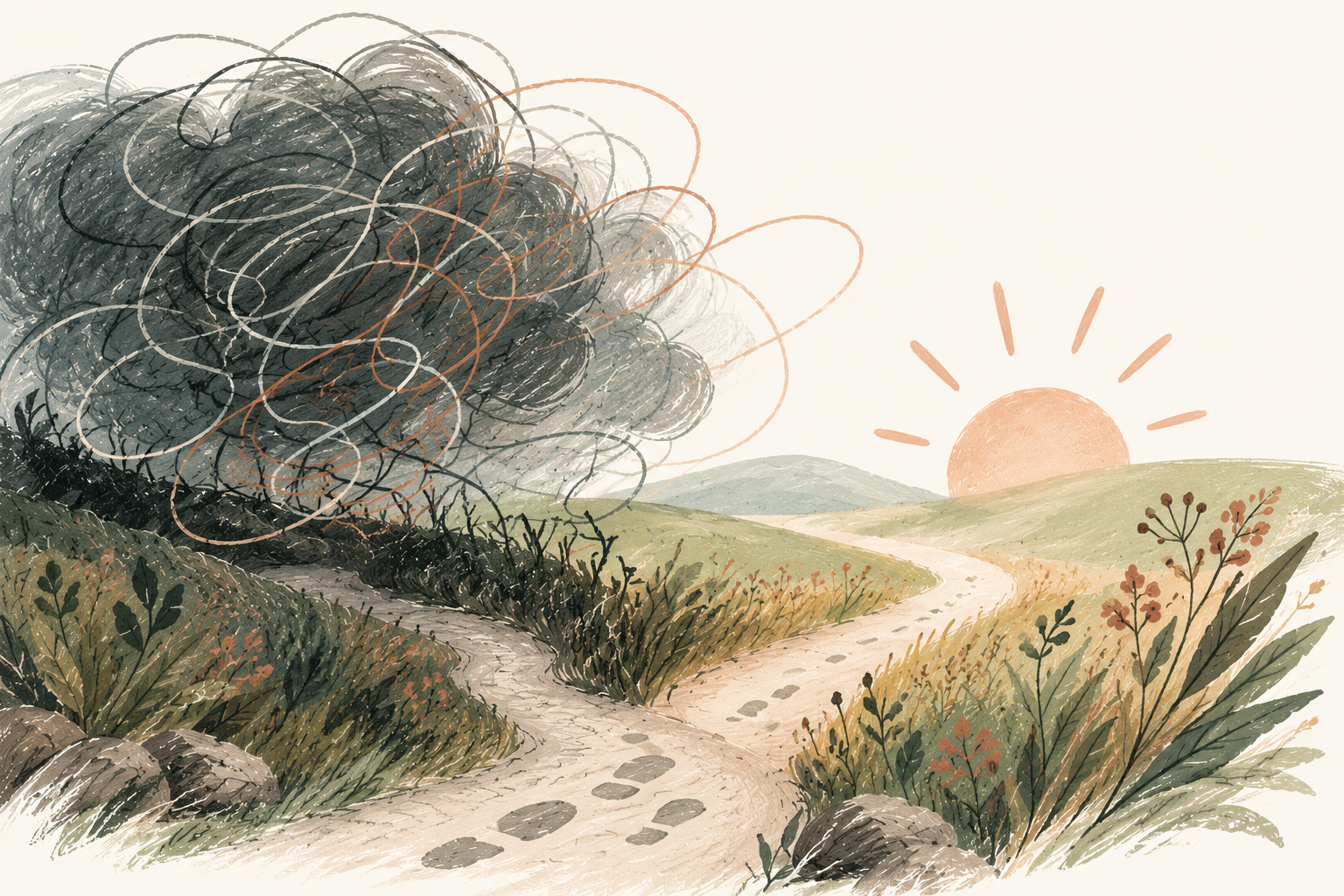
Anxiety in children does not always look like anxiety.
A child may not say, “I feel anxious.” They may not even recognise what they are feeling as anxiety.
Instead, parents might see a child who refuses to go to school. A child who becomes angry when it is time to leave the house. Someone who asks the same question twenty times, needs to know exactly what is going to happen, complains of a stomach ache before an activity, cannot fall asleep alone, or suddenly seems unusually controlling.
From the outside, these behaviours can look difficult, oppositional or disproportionate.
From inside the child, the experience may be very different.
What parents see — and what children may feel
A parent might see refusal:
“I’m not going.”
But underneath may be:
I don’t know if I can cope with what will happen when I get there.
A parent might see anger:
“Leave me alone!”
While the child’s nervous system may already be overwhelmed:
Everything feels too much and I need this to stop.
A parent might see endless questions:
“What time are we leaving?”
“Who’s going to be there?”
“How long will we stay?”
“What happens afterwards?”
It can feel as though no answer is ever enough.
But the child may be trying to create certainty in a situation that feels unpredictable:
If I know exactly what is going to happen, perhaps I will feel safe enough to do it.
A parent might see controlling behaviour — needing things done in a particular order, struggling when plans change, or becoming distressed when somebody does something differently.
Underneath may be an attempt to make the world feel more manageable.
And sometimes what parents see is physical rather than behavioural: headaches, stomach aches, feeling sick, needing the toilet frequently, difficulty sleeping, racing heart, shakiness or suddenly feeling unwell before something difficult.
The child’s distress is not imaginary because its origin may involve anxiety. The body is part of how anxiety is experienced.
Children don’t always have words for anxiety
Adults have had years to develop language for internal experience.
Even then, we are not always very good at it.
For children, recognising “this sensation in my stomach, these thoughts racing through my head and this overwhelming desire not to go through that door are anxiety” requires quite sophisticated awareness.
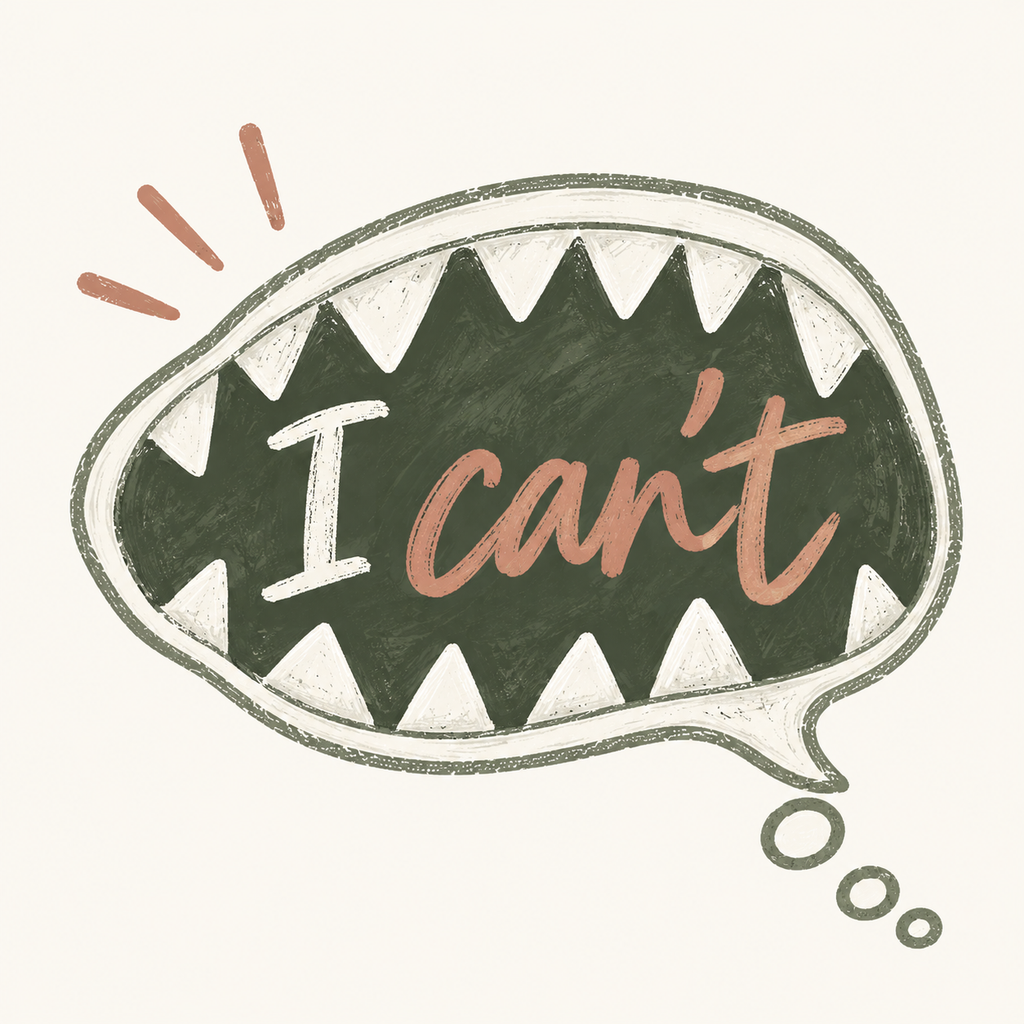
Sometimes the child simply knows:
I can’t.
And this is an important distinction.
When adults hear “I won’t”, we naturally begin thinking about behaviour, boundaries and consequences.
But when the child’s experience is closer to “I can’t manage what happens inside me when I do”, the same response may not help.
That doesn’t mean children experiencing anxiety should never be encouraged, challenged or given boundaries.
It means we need to understand what we are responding to.
Anxiety can look surprisingly like difficult behaviour
When the nervous system perceives something as threatening, its priority is not good behaviour.
Its priority is protection.
For one child, that might mean moving away: hiding, avoiding, withdrawing or refusing.
Another may move towards the threat: becoming argumentative, angry or combative.
Another might become very quiet, compliant or unable to respond at all.
And some children try to manage anxiety through control — controlling routines, situations, other people or information because predictability helps their world feel safer.
These responses can be particularly confusing when the situation doesn’t appear dangerous to the adult.
But nervous systems don’t respond only to objective danger.
Uncertainty, sensory overwhelm, social situations, separation, previous experiences, fear of getting something wrong, changes in routine or expectations that feel beyond the child’s capacity can all matter.
The question therefore becomes less:
“Why are they behaving like this?”
and more:
“What is happening for them when this behaviour appears?”
The behaviour still matters
Understanding behaviour is not the same as excusing everything a child does.
A frightened child can still shout something hurtful. An overwhelmed child can still throw something. An anxious child may gradually organise the whole family around avoiding whatever frightens them.
Understanding the anxiety beneath a behaviour doesn’t mean abandoning boundaries.
It helps us decide what kind of response is actually needed.
Sometimes a child needs comfort.
Sometimes they need help making something feel manageable.
Sometimes they need a clear and steady boundary.
Sometimes avoiding something repeatedly may actually be strengthening the anxiety, and they need gentle support to move towards what feels difficult.
Often, it is a mixture.
There isn’t one correct response to anxious behaviour because there isn’t one child underneath it.
From behaviour to understanding
When we become curious about what sits beneath behaviour, something changes.
The child who seemed deliberately difficult may begin to look overwhelmed.
The child who appeared controlling may be desperately seeking predictability.
The child who keeps asking the same question may not need another answer so much as help tolerating uncertainty.
And the parent who thought they simply needed to become firmer — or more patient, or more consistent — may discover that the situation is more nuanced than that.
We still need to decide what to do.
But now we are responding to the child, rather than only reacting to the behaviour.
And that is often where change begins.
If this feels familiar
If you recognise some of these patterns in your child and find yourself wondering what is happening beneath the behaviour — or simply feel unsure about how to respond — you don’t have to work it out alone. Through Bond Parent Mentoring and Support, we can slow things down together, look at what may be happening for your child and for you, and begin to find responses that make sense for your particular family.